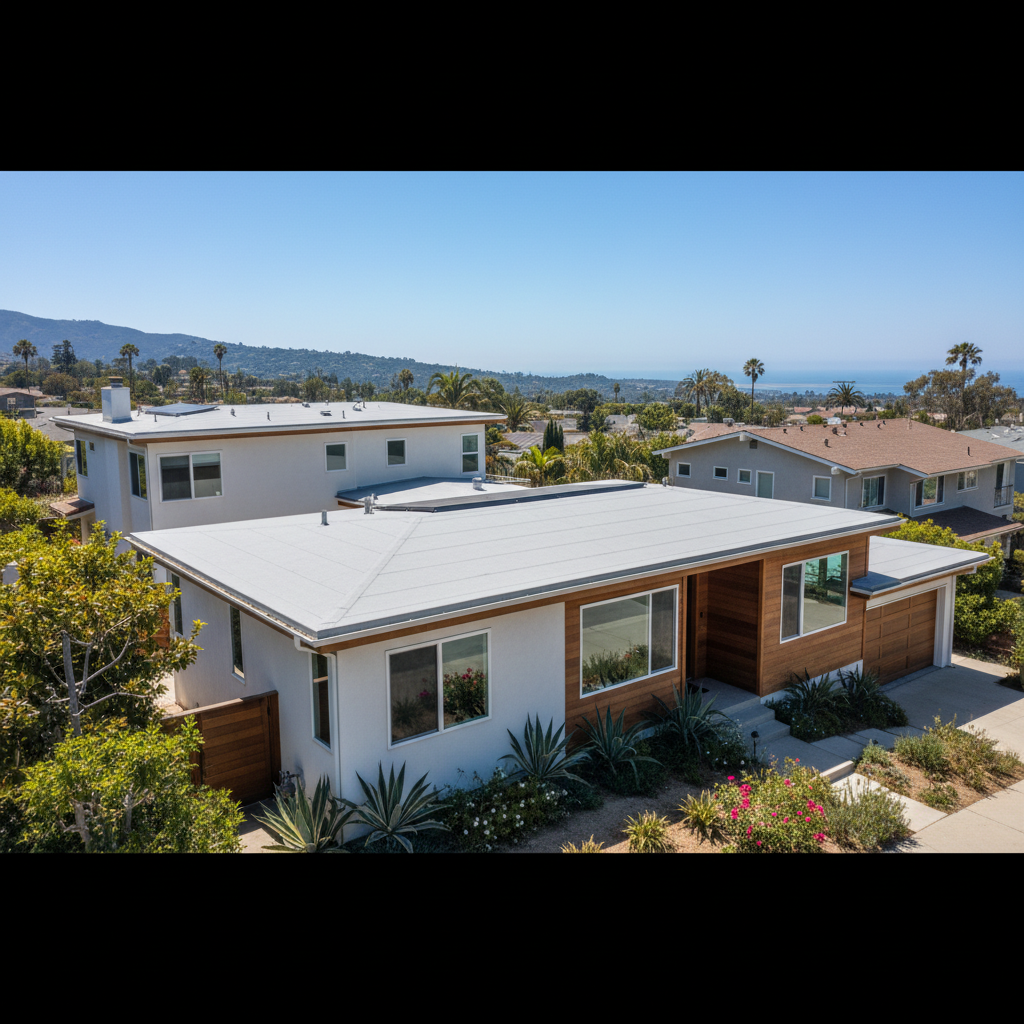
Flat roofs, or low-slope roofs as we often call 'em, are all over Santa Monica. You see 'em on those classic mid-century modern homes in the Sunset Park area, on commercial buildings downtown, and even on some of the newer multi-family developments popping up near the Expo Line. They offer a clean look, and frankly, they're great for rooftop decks, which everyone loves out here.
But don't let the name fool you; a "flat" roof isn't actually flat. It needs a slight slope, usually a quarter-inch per foot, to make sure water drains properly. If it doesn't, you're asking for trouble, and that's where I've seen a lot of homeowners get into hot water. Believe me, you don't want standing water up there.
Why Flat Roofs Are Different
Unlike a steep-sloped shingle roof where gravity does most of the work pushing water off, a flat roof relies entirely on its membrane and proper drainage. That means the materials and the installation are absolutely critical. You can't just slap some shingles on it and call it a day.
Here in Santa Monica, we deal with that marine layer fog and occasional heavy rains. If you've got standing water on your roof, that constant moisture is going to find a way in eventually. It'll degrade the membrane, lead to leaks, and then you're looking at potential dry rot in your decking or even structural damage. I've seen it happen too many times, especially on older buildings where the original drainage wasn't designed for the long haul.
Common Flat Roof Materials We Use
When it comes to flat roofing, you've got a few solid options, and each has its pros and cons:
- TPO (Thermoplastic Polyolefin): This is a popular choice, especially for commercial properties and larger residential flat roofs. It's a single-ply membrane, usually white, which helps reflect sunlight and keep your building cooler – a big plus with our California sun. It's durable, relatively easy to install, and pretty cost-effective.
- PVC (Polyvinyl Chloride): Similar to TPO, PVC is another single-ply option. It's known for being incredibly tough and resistant to chemicals, oils, and even fire. It's a bit more expensive than TPO, but it's a fantastic long-term solution, particularly if you're planning on heavy foot traffic or equipment on the roof.
- Modified Bitumen (Mod Bit): This is a more traditional option, essentially an asphalt-based product reinforced with polymers. It comes in rolls and is often installed in multiple layers, sometimes torched down or self-adhered. It's tough, flexible, and has a good track record. You'll often see this on older apartment buildings around Ocean Park.
- Built-Up Roofing (BUR): This is the granddaddy of flat roofing, using multiple layers of asphalt and felt. It's very robust and provides excellent waterproofing, but it's also more labor-intensive and heavier. Less common on new residential builds, but still around.
Drainage is King
I can't stress this enough: drainage is the single most important factor for a flat roof's longevity. You need to make sure scuppers, internal drains, and gutters are properly sized, installed, and kept clear. Leaves, debris, even a rogue frisbee can block a drain and turn your roof into a swimming pool. Regular maintenance, especially after a windy day or a downpour, is non-negotiable.
We often see issues with older homes where the original drains might be undersized or poorly placed. Sometimes, adding a new drain or re-sloping a section of the roof is the best way to prevent future headaches. It's all about getting that water off the roof as quickly as possible.
Why Local Expertise Matters for Flat Roofs
You wouldn't hire a desert roofer to work on a beach house, right? Same principle applies here. Santa Monica has its own microclimate – that consistent ocean breeze, the salt in the air, the way the sun hits buildings differently depending on their orientation to the ocean. These things impact how a roof performs over time.
A local contractor, like us at Coastal Roofing, understands these nuances. We know which materials hold up best against the coastal elements, we're familiar with the common building styles and their unique challenges, and we've got a handle on local building codes and permitting. We've replaced and repaired hundreds of flat roofs in this town, from the single-story bungalows near Venice to the larger commercial spaces on Lincoln Boulevard.
When you're dealing with a flat roof, you want someone who's seen it all, someone who can spot a potential problem before it becomes a major leak. It's not just about putting a new membrane down; it's about understanding the entire system and making sure it's going to protect your property for years to come.